
Construction ERP
Connecting Prefabrication and On-Site Builds with an AI-Powered ERP
Last updated:
November 23, 2025
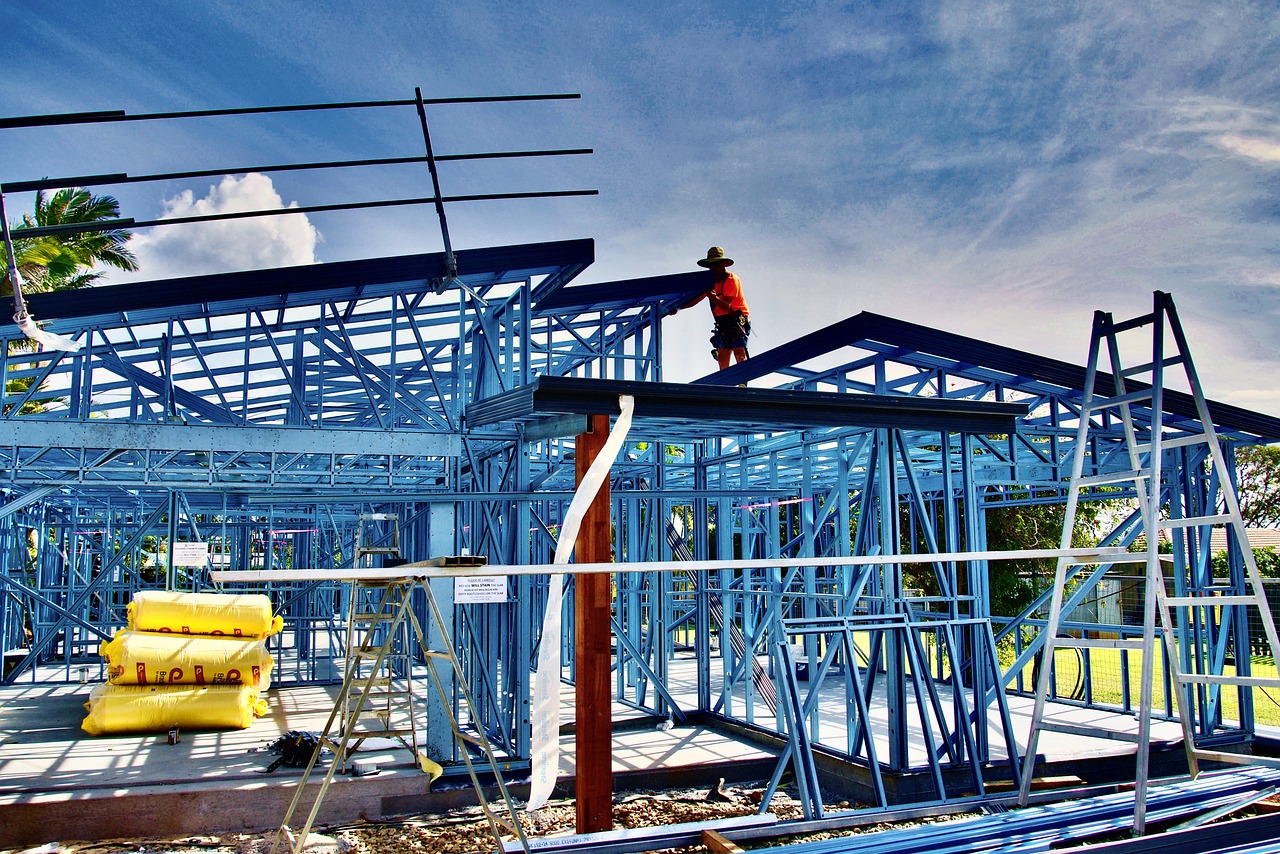
Off-site manufacturing—often called prefabrication or modular construction—is revolutionizing the building industry by shifting the assembly of walls, floors, and complete room modules into controlled factory environments. This approach delivers significant advantages: factory conditions eliminate weather delays and yield consistent quality, while standardized production cuts material waste by up to 50% and can boost defect-free rates above 95% (Wikipedia). Yet prefabrication also introduces a new layer of logistical complexity, from synchronizing factory output with on-site crews to tracking hundreds of components in transit. Without a unified system, that complexity can erase prefab’s gains through surprise delays, budget overruns, and miscommunications. That’s why leading contractors are turning to AI-powered ERPs—like Merlin AI—to tie together off-site production and field assembly under one intelligent platform.
Why Off-Site Manufacturing Is Taking Off
The appeal of building substantial modules off-site mirrors the convenience of meal-kit delivery: components arrive pre-measured and partially assembled, slashing on-site labor and waste. In fact, McKinsey analysis finds that volumetric modular techniques can shorten end-to-end project schedules by 20–50% and cut overall costs by up to 20% (McKinsey & Company). Meanwhile, Boston Consulting Group notes best-in-class off-site projects operate with less than a 5% defect rate and halve construction emissions and waste compared to traditional builds (Wikipedia). North America’s off-site construction market alone is projected to grow from $49.5 billion in 2021 to $80.9 billion by 2031, at a 4.9% CAGR (Wikipedia). As regulations push for greener, faster housing solutions, prefab’s momentum shows no sign of slowing.
The Coordination Challenge in Prefab Projects
Despite its clear upside, prefabrication can stall when factory, transport, and site schedules aren’t perfectly aligned. Industry data reveal construction productivity has barely budged—just a 1% CAGR from 2000 to 2022—while manufacturing saw a 3% gain (McKinsey & Company). Fragmented tools worsen the problem: scheduling apps, procurement spreadsheets, and accounting systems each hold only part of the picture, leading to:
- Disconnected Timelines: Factory build sheets and on-site installation plans live in separate calendars.
- Inventory Blind Spots: Without real-time stock data, you risk idle crews or excess storage.
- Budget Drift: Manual cost tracking hides variances until they balloon.
- Communication Breakdowns: Email chains and siloed chats cause misaligned expectations.
When even one module ships late, the downstream cascade of delays and extra expenses can wipe out prefab’s advantages.
An AI-First ERP: The Single Source of Truth
A purpose-built AI ERP like Merlin AI unifies every step—from factory floor to final handover—under one intuitive system. Unlike generic ERPs, Merlin AI is architected for construction’s off-site demands:
- Unified Scheduling: AI-driven timelines blend factory production sequences with on-site assembly plans. If a supplier delay pops up, downstream tasks automatically shift to avoid idle periods .
- End-to-End Procurement & Inventory: Live supplier tracking and automated purchase orders guarantee materials arrive on schedule and in the right quantities .
- Financial Automation & Budget Oversight: All costs—factory labor, transport fees, site hours—feed into one budgeting engine, delivering real-time profit-and-loss insights and early overrun alerts .
- Predictive Reporting & Risk Alerts: Drawing on historical data, Merlin AI’s forecasting flags potential pinch points—like plant capacity constraints or logistics bottlenecks—days before they threaten your timeline .
With these capabilities, your ERP becomes the command center that keeps prefab components flowing seamlessly from shop to site.
Key Merlin AI Features for Off-Site Success
Merlin AI tailors its core modules to modular construction:
Feature
Off-Site Benefit
AI-Powered Estimating & Configurator
Halves quotation time by auto-building cost models for modules, cross-checking supplier pricing, and issuing RFQs instantly .
Supply Chain & Procurement Optimization
Tracks supplier performance in real time; suggests cost- or eco-friendly alternatives when shortages loom .
Automated Scheduling & Coordination
Dynamically aligns factory outputs with crew assignments, preventing bottlenecks on both ends .
Financial Automation & Budget Tracking
Eliminates invoice-entry errors for factory work and transport, providing instant visibility into spend vs. forecast .
Real-Time Reporting & Forecasting
Delivers live dashboards on cycle times, yield rates, delivery accuracy, cost variance, and labor efficiency .
Measurable Impact: Data-Driven ROI
Contractors adopting Merlin AI for off-site workflows consistently see:
- 30% Faster Project Timelines, thanks to end-to-end schedule synchronization .
- 90% Automated Procurement Workflows, eliminating manual PO creation and follow-ups .
- 20% Cost Savings, driven by reduced waste, fewer delays, and optimal labor utilization .
Jeff Cardoso, VP of Operations at Azazie, says:
“Merlin has been a game-changer for us at Azazie!”
Best Practices for ERP-Enabled Prefab Integration
To maximize your off-site ERP rollout:
- Map Every Workflow: Document both factory and field processes, then identify where ERP automation can eliminate manual handoffs.
- Pilot & Scale Gradually: Start with one modular line or pilot project to refine settings and build user confidence.
- Cross-Train Teams: Ensure factory managers, site supervisors, and procurement staff all learn the system together—alignment is key.
- Leverage Open Integrations: Sync your BIM models, transport management software, and accounting systems to avoid new silos.
With these steps, your ERP will become the digital backbone that transforms prefab from niche tactic to core competitive advantage.
The Future: Smarter, Greener, Fully Automated Builds
Looking ahead, AI-powered ERP will evolve to support:
- Predictive Quality Control, where machine-vision inspections catch factory defects before shipping.
- Dynamic Logistics, automatically rerouting transport when traffic or weather issues arise.
- Sustainability Insights, recommending lower-carbon materials and optimized production layouts to shrink your environmental footprint.
By choosing an AI-first ERP like Merlin AI, you position your business at the forefront of these innovations—ready to build faster, smarter, and greener.
Off-site manufacturing holds enormous promise, but only when its many moving pieces move in concert. Merlin AI’s specialized, AI-driven ERP unifies your factory, supply chain, site, and finance teams on one intelligent platform—delivering real-time visibility, proactive alerts, and proven ROI: up to 30% faster schedules, 90% procurement automation, and 20% cost savings.
Ready to revolutionize your off-site builds?
Book a demo at merlinai.co today and discover how Merlin AI can simplify, optimize, and transform the way you construct.
FAQ’s
What is off-site manufacturing in construction?
It’s the process of building modules, walls, and components in a factory instead of on-site. This improves quality, reduces waste, and speeds up project timelines.
Why does prefab require stronger coordination?
Factory output, transport schedules, and on-site crews must align perfectly. One late module can delay everything and erase prefab’s advantages.
How does an AI-powered ERP help prefab projects?
It unifies production, logistics, materials, budgets, and site activities under one system, providing real-time visibility and eliminating manual miscommunication.
Can AI predict delays or cost issues in off-site construction?
Yes. AI analyzes patterns across suppliers, labor, weather, and material usage to warn teams before delays or overruns occur.
What benefits does Merlin AI deliver for off-site workflows?
It synchronizes schedules, automates procurement, prevents bottlenecks, and cuts costs—helping teams build faster, more reliably, and with fewer surprises.


